Oct 8, 2026Brake Knowledge
Brake Caliper RFQ Guide: What Information Should Buyers Provide?
What information should you provide when requesting a brake caliper quotation? Learn how OE numbers, quantity, LH/RH, bracket configuration, packing and trade terms affect an accurate quote.
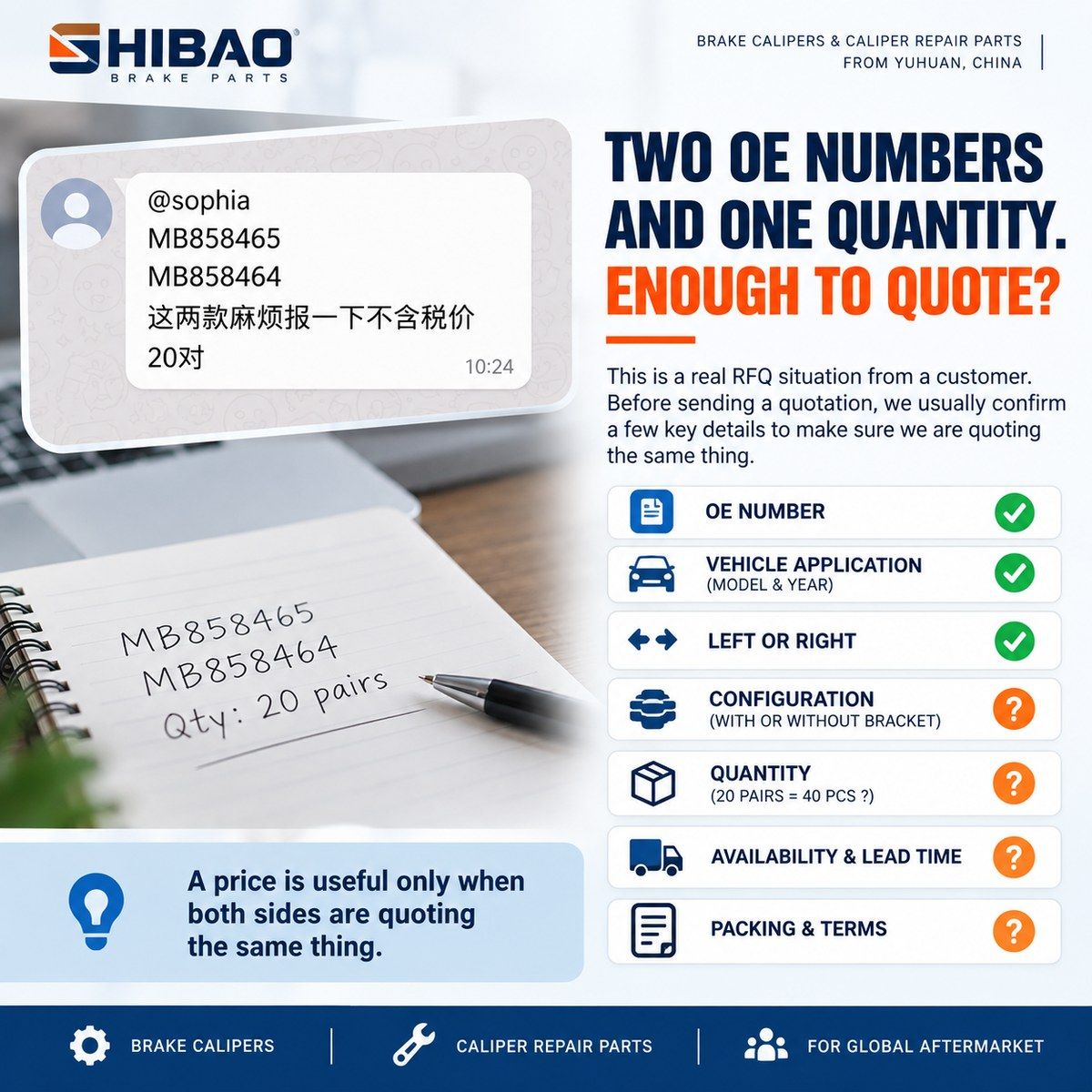
A brake caliper RFQ can be very short.
Sometimes a buyer sends two OE numbers, a quantity, and one sentence:
Please quote 20 pairs.
That is often enough to start a conversation.
But is it enough to make quotations from different suppliers directly comparable?
Not always.
Before comparing prices, buyers and suppliers should first make sure they are quoting the same product, configuration, quantity and commercial terms.
1. Start with the OE Number
The OE number is usually one of the most useful starting points for a brake caliper quotation.
For example, an RFQ may contain:
- MB858465
- MB858464
- Quantity: 20 pairs
The supplier can use these references as the starting point for product verification.
However, an OE number alone does not always answer every commercial question required for a quotation.
2. Confirm LH and RH
For brake calipers supplied as left-hand and right-hand units, the quantity should be clearly defined.
For example:
20 pairs = 20 LH + 20 RH = 40 calipers
If a buyer writes only “20 sets” or “20 pairs,” confirming the actual quantity before quotation can prevent misunderstandings.
This becomes even more important when several OE references are included in one RFQ.
3. Confirm the Caliper Configuration
Two quotations should not be compared until the product configuration is clear.
Depending on the application and supplier, the quotation may need to clarify whether the product is:
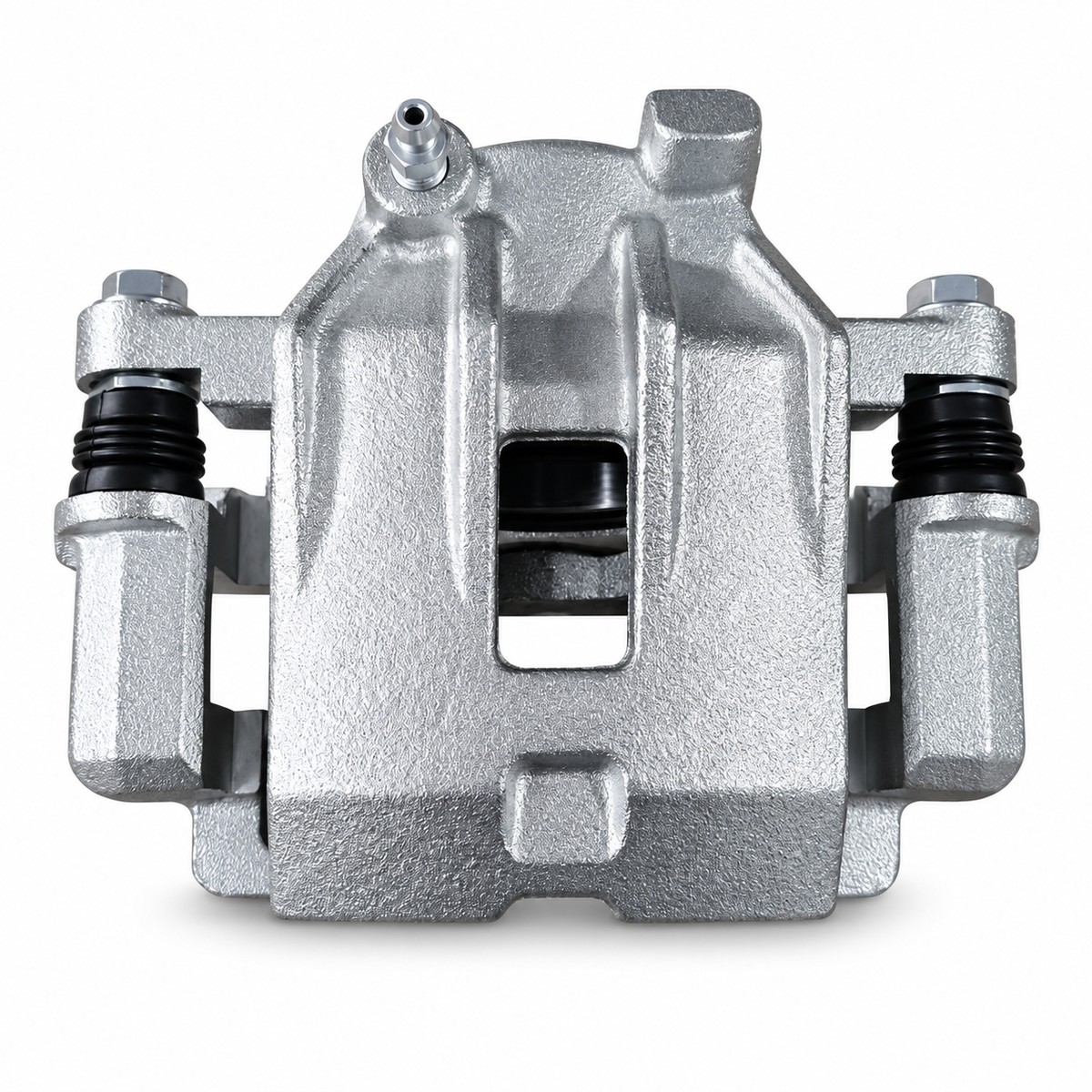
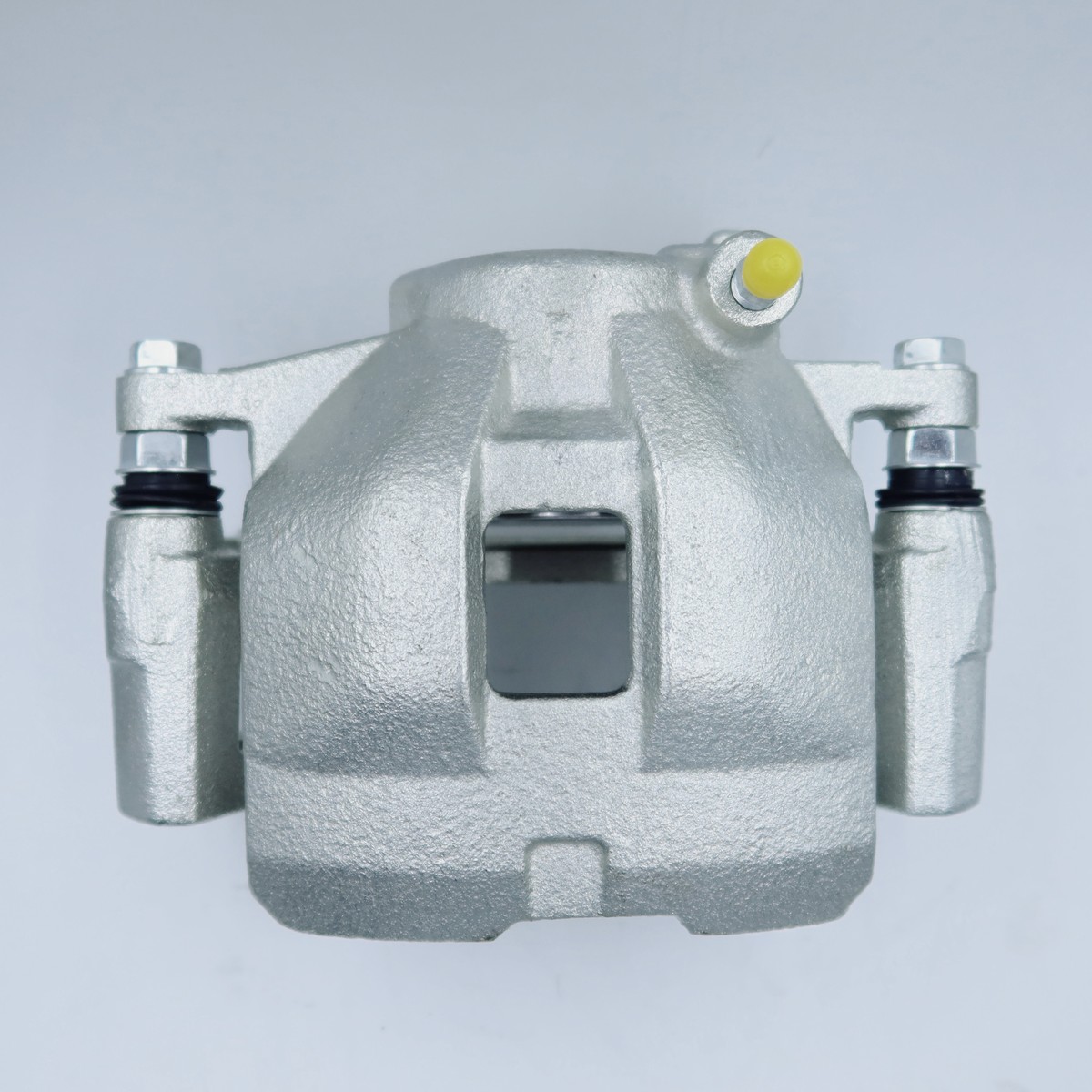
- Caliper with bracket
- Caliper without bracket
- Complete assembly
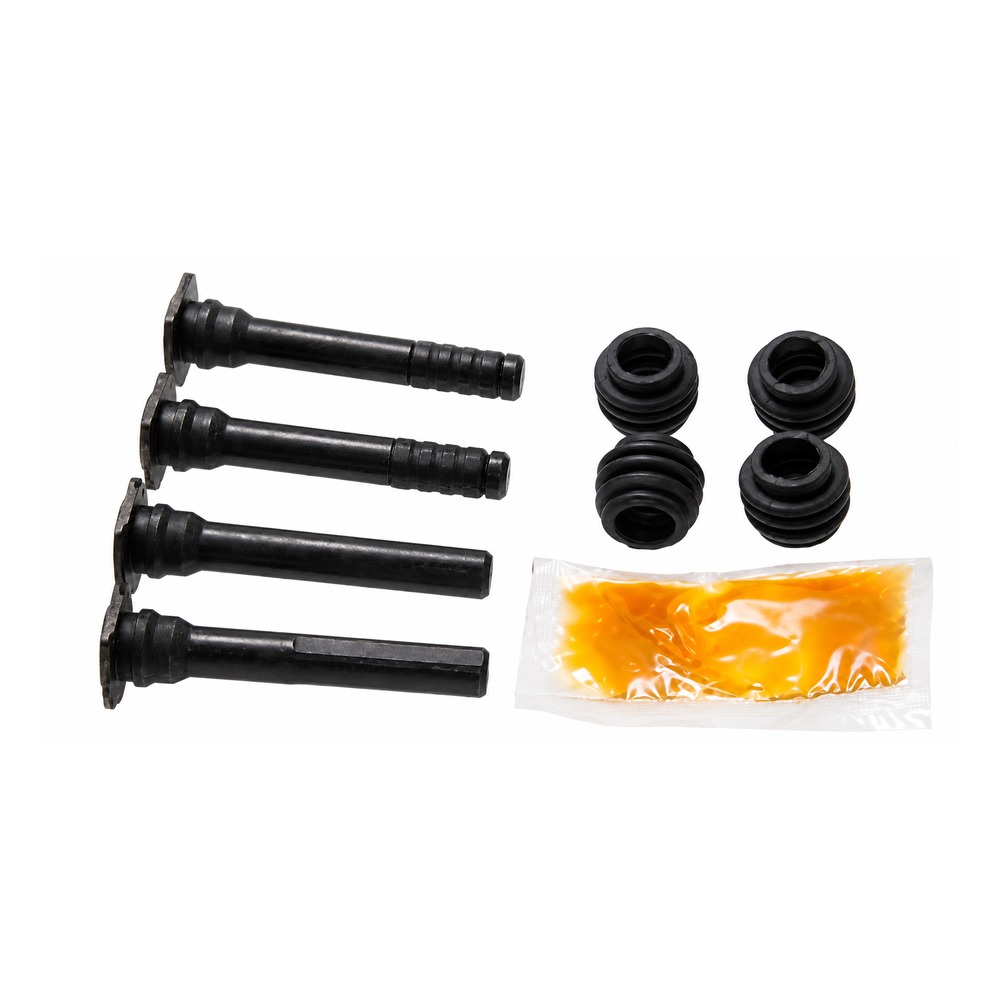
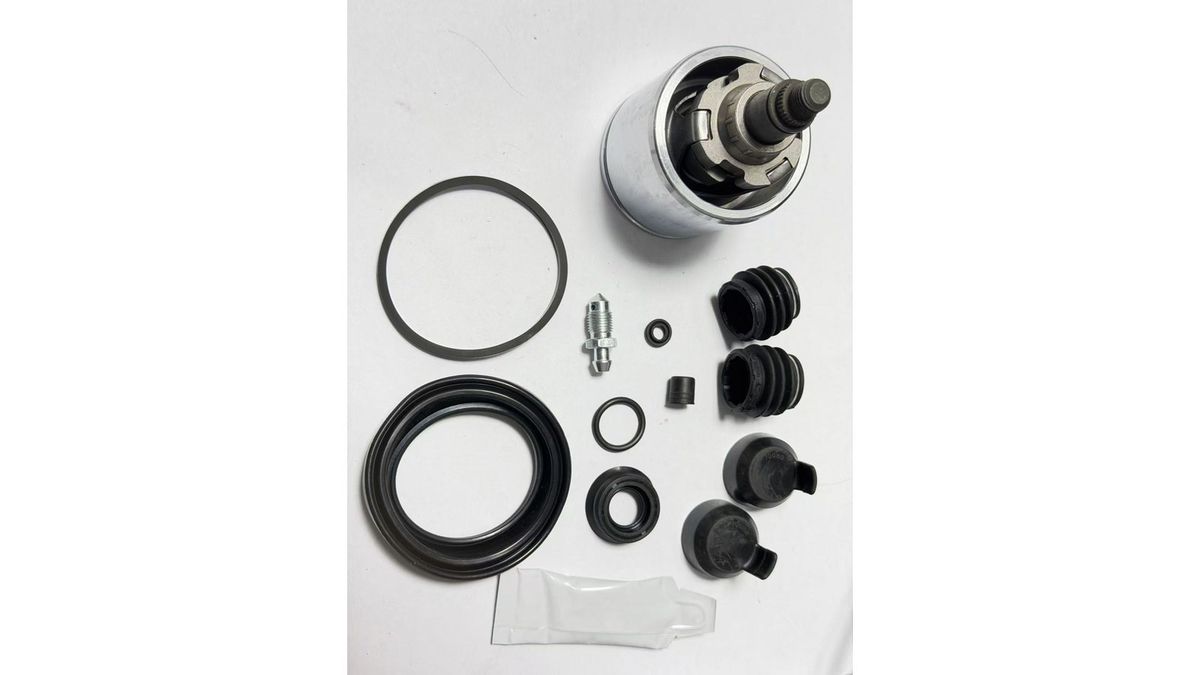
- Another specified configuration
A lower price does not necessarily mean the same product is being quoted.
First compare what is included. Then compare the price.
4. Provide Vehicle Application When Available
OE numbers are useful, but vehicle information can provide another layer of verification.
Useful information may include:
- Vehicle make
- Model
- Model year
- Front or rear axle
- LH or RH
For some applications, photos or key dimensions may also help when additional confirmation is necessary.
5. Specify the Required Quantity Clearly
Quantity can affect both availability and quotation.
Instead of writing:
Qty: 20
it is better to specify:
20 pcs LH + 20 pcs RH
or:
20 pairs / 40 pcs total
Clear quantities help suppliers check stock, production requirements and packing more accurately.
6. Confirm Packing Requirements
Packing requirements should also be discussed before the order is finalized.
For example:
- Neutral packing
- Customer brand packing
- Other agreed packing requirements
Custom packaging may require additional information, quantities or preparation, so it should not automatically be assumed to be included in the same quotation.
7. Ask About Availability and Lead Time
Price is only one part of a sourcing decision.
Buyers may also need to know whether the requested references are available and the expected lead time.
For mixed-SKU orders, different references may have different availability.
This is why a supplier may need to check the complete RFQ before confirming delivery.
8. Make the Trade Terms Clear
When comparing quotations, make sure the commercial terms are also comparable.
For example:
- EXW
- FOB
- Other agreed terms
An EXW price and a FOB price should not be compared as if they represent exactly the same cost.
A Simple Brake Caliper RFQ Checklist
Before sending an RFQ, buyers can prepare:
- OE number
- Vehicle application
- LH / RH
- Required quantity
- With or without bracket
- Packing requirement
- Required trade term
- Expected delivery requirement
Not every inquiry will contain all of this information.
That is normal.
A short RFQ can start the conversation, and the remaining details can be confirmed between buyer and supplier.
Final Thought
The fastest quotation is not always the most useful quotation.
For brake caliper sourcing, a good quotation should make it clear what is being supplied, how many pieces are included, what configuration is quoted, and under what commercial conditions.
Before comparing two prices, first make sure both suppliers are quoting the same requirement.
Need a brake caliper quotation?
Send us your OE numbers, required quantities and application information. If some details are unavailable, photos or samples can also help us check the application.